
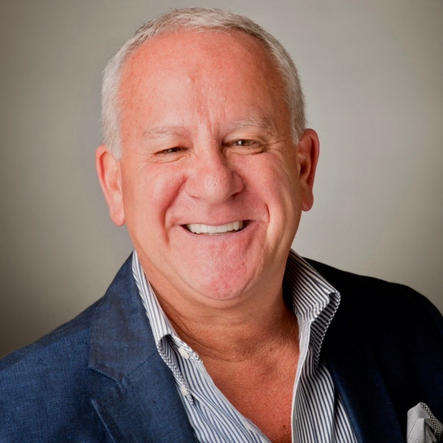
After eight years on the Board of Trustees of the Canadian Museum for Human Rights, our national museum dedicated to advancing dignity, equality, and fundamental freedoms. Ottawa-based human rights lawyer and former federal public servant Mark Berlin made the decision to publicly resign from the board.
His departure came amidst growing controversy surrounding the museum’s Palestinian Nakba exhibit, which has drawn criticism from Jewish organizations, community leaders, and the federal government over concerns about historical accuracy and balance.
For Berlin, however, the decision was about far more than a single exhibit.
“It wasn’t one moment,” he said. “It was years of watching a pattern develop.”
Although originally from Montreal, Berlin has called Ottawa home for more than four decades after moving here to attend law school. Drawn by the city’s role as the centre of Canadian government, he built a career focused not on corporate law, but on public policy and human rights.
After completing postgraduate studies in international law and human rights at the University of Cambridge in England, Berlin returned to Canada just as the country was preparing to adopt the Canadian Charter of Rights and Freedoms. As an articling student with the Department of Justice, he conducted research relating to Section 7 of the draft Charter before becoming one of Canada’s earliest federal policy advisers specializing in human rights.
His career included serving as Director of Race Relations and Multiculturalism, advising four federal Attorneys General, and later serving as Director General of International Programs at the Department of Justice. During that time, he spent four years working in the Middle East, including maintaining an office in Ramallah and advising on legal and governance initiatives within the Palestinian Authority.
Those experiences, he says, shaped how he viewed the museum’s approach to the Middle East.
“I wasn’t trying to dictate what an exhibit should look like,” Berlin said. “I was trying to talk about balance and the consequences of getting it wrong.”
Berlin joined the museum’s board in 2018 through a Governor in Council appointment, believing his lifelong commitment to human rights made him suited for the role.
For much of his tenure, discussions surrounding a future exhibit on the Palestinian experience remained preliminary. But Berlin says everything changed following the October 7 terrorist attacks.
He recalls being deeply troubled by what he viewed as the museum’s failure to explicitly acknowledge the victims of the attacks in an internal message to staff and trustees.
“I felt there was a reluctance to name what had happened,” he said. “From that point on, I found myself repeatedly raising concerns about how Jewish voices and antisemitism were being addressed.”
Berlin describes the months that followed as increasingly difficult. As the board’s only Jewish member during the latter part of his term, he says he often felt isolated when discussions turned to Israel, antisemitism, and the Nakba exhibit.
He also believes his professional experience in the region was too often discounted.
“If we were discussing Indigenous issues, disability rights, or other communities represented around the board table, their lived experience was naturally respected,” he said. “When it came to Jewish history and the Middle East, suddenly everyone considered themselves an expert.”
Despite voicing his concerns internally over an extended period, Berlin says he ultimately concluded that remaining silent would accomplish nothing.
“I tried to work within the process,” he said. “When that failed, I felt I had no choice but to speak publicly.”
The museum has defended its exhibit and maintains that it reflects established curatorial practices, though Canadian Identity and Culture Minister Marc Miller has since called for changes after identifying what he described as curatorial errors.
Looking back, Berlin says October 7 also transformed his own Jewish identity.
Before then, he describes himself as someone who felt culturally Jewish, but whose personal interests had increasingly centred on Buddhist philosophy. Since the attacks and the surge in antisemitism that followed, he says that changed dramatically.
“I became what I call a born-again Jew,” he said. “I realized I couldn’t separate myself from my community anymore.”
That realization now informs how he believes Jews should respond to growing hostility in public spaces.
“I will no longer be the silent Jew,” Berlin said. “Public space belongs to Jews as much as anybody else. We have every right to be present, to speak, and to be heard.”
For Berlin, that conviction extends beyond one museum or one exhibit. It reflects what he sees as a broader responsibility to ensure Jewish voices remain part of Canada’s ongoing conversations about human rights.