Originally from Ottawa, Ian Chodikoff is an architect, urban designer and writer who has lived and worked in cities across Canada and in Singapore. He edited Canadian Architect magazine from 2003 to 2012 and went on to serve as executive director of the Royal Architectural Institute of Canada. Today, he advises architecture design firms on communications and strategy through his consulting practice, Chodikoff & Ideas.
From his home in Prince Edward County, Chodikoff writes about rural life in The Ruralist, his Substack newsletter. In a recent essay, he reflects on what it means to live as a Jew in rural Ontario three years after the October 7 attacks and in the wake of the attack on Belleville's Sons of Jacob synagogue, where he is a member.
By Ian Chodikoff
The lanterns
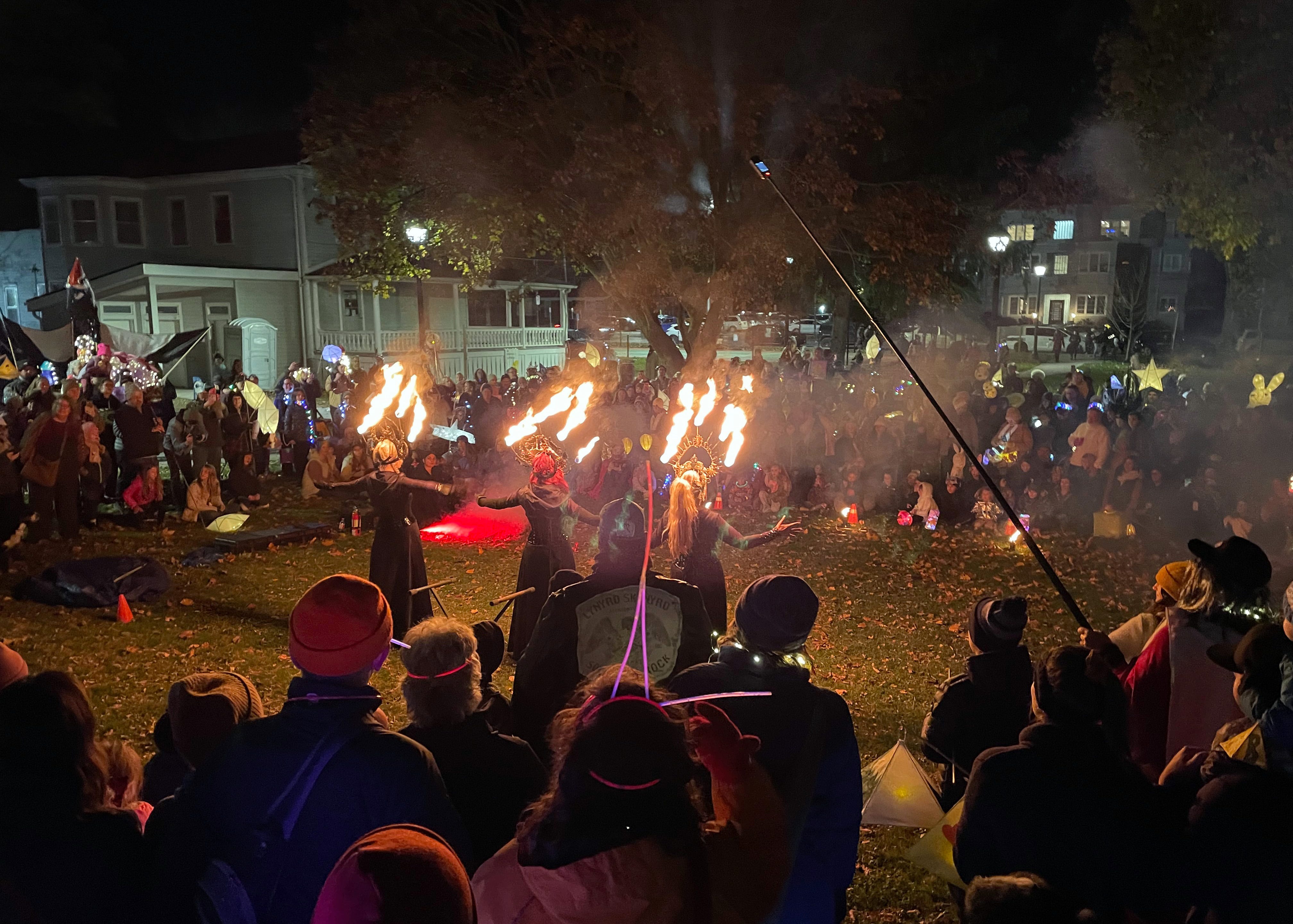
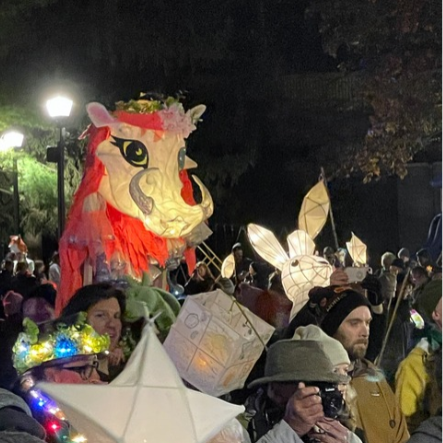
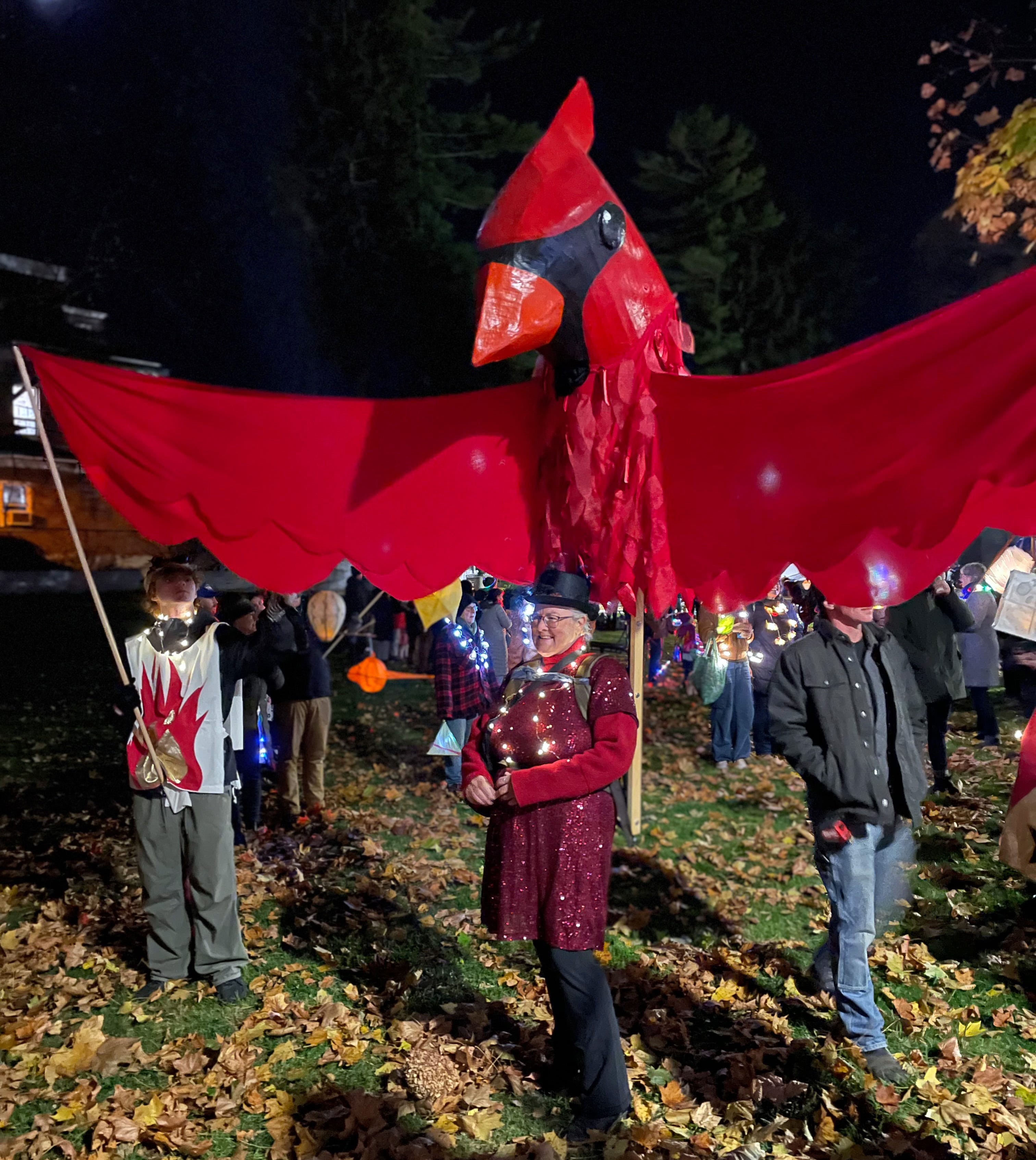
Three years ago this November, I moved to Prince Edward County. Tonight I mark the anniversary at the Firelight Lantern Festival, organized by the Department of Illumination, a local not-for-profit founded by artists known for their large-scale puppetry. The group punches far above its weight. Since 2013, hundreds of handmade lanterns have been carried through Benson Park and along Picton’s Main Street to the Crystal Palace, where the music and food carry on. It is one of the most inspiring things I have experienced in the County.
Walking with the lanterns is a community experience I have grown to cherish since I arrived, and in one surprising way it has brought me closer to my Jewish faith and identity. I never imagined that a rural community would bring me closer to my faith than any of the large cities I have lived in. Other things have contributed over the past few years: the global rise of antisemitism, and the lingering aftereffects of the pandemic, which sent many of us looking for more grounded, in-person experiences tied to the land we live on.
One month after
I moved here in November 2023. The plan was simple enough. I would rent a house in the County. The woman I was seeing at the time would keep her condo in Toronto. We would drive back and forth for a year and see what life looked like among the County’s designers, producers, writers and artists. A month before the move, Hamas crossed into Israel and murdered some 1,200 people, the deadliest single day for Jews since the Holocaust. The upheaval began, both in my heart and on a global scale.
I never expected that moving to a rural community would do anything to my Jewish identity, let alone both challenge it and strengthen it. I had assumed, without ever thinking about it, that being Jewish was an urban thing.
That assumption started early. I grew up in Ottawa and went to a public school where I was the only Jewish kid in most grades. My classmates’ parents came from Korea, Japan, Pakistan and India; there were Italian kids and French-Canadian kids, rich kids and poor kids. I was in an early-immersion bilingual program, and many of my teachers were devout Catholics. One had been a priest. Another had been a nun. There were French-speaking teachers from Haiti and Morocco. It was a wonderful education in being a minority among minorities wrapped inside what might have been the golden years of Canada’s bilingual aspirations. Three afternoons a week I was driven to Hebrew school, which I loathed at the time. Nevertheless, it taught me to seek out Jewish communities wherever I landed: Vancouver, Quebec City, Singapore, Cambridge, and then Toronto, where I spent more than half my adult life looking for my place in a Jewish community that is diverse and thoroughly balkanized.
If you grew up in cities, Jewishness came with all the urban culture. The bagels and the delis. The Bar and Bat Mitzvah parties. Jewish film and music festivals, the charity events and community gatherings. Above all, the critical mass: enough Jews in one place to sustain argument, culture and the pleasure of being understood without having to explain. Moving to a county of 28,000 people spread across a thousand square kilometres, I assumed I was leaving all of that behind to live in a place with a few dozen Jews. It was also my move here that forced me for the first time in my life to explain my Jewish faith.
The commuting year
For my first year in the County, I drove to Toronto every week, where my friends in the city were doing what most Jews around the world were doing after October 7: talking about the rise of antisemitism, microaggressions, and the schisms it opened in our own social circles. Friends, Jewish and not, were misreading the history of Israel and Palestine, reading it selectively, or repeating what their social media feeds told them to believe. It was heartbreaking to hear people I respected recite propaganda as if it were memory. Distorted truths and realities.
I should be clear about where I stand. I grew up knowing there are no simple answers to the Arab-Israeli conflict, and I believed in the possibility of a two-state solution in the Middle East where Israel and a Palestinian state would peacefully co-exist. I am a moderate Jew, and the years of terrorism and bloodshed broke my heart, but it was something I had endured since childhood. Visiting Israel brought it home, while also giving me a sense of hope. I certainly have no use for the far-right rhetoric of some Israeli politicians. I could even argue about the severity of Prime Minister Netanyahu’s response after October 7. What I could not argue against, then or now, was the existential threat facing Israelis and Jews. I am both a Jew and a Zionist, and I no longer accept that those words can be pried apart by people who mean neither of them kindly.
Before I started my own consultancy, and even before October 7, the ground was already shifting at the architecture and urban planning firm where I worked. To its credit, the office was encouraging staff to organize around ideas that fit within the rubric of “social justice,” and it supported those efforts by allowing staff to log a certain number of hours to social issues on their timesheets. At one point I tried to rein those efforts in, because this was an architecture firm, not an advocacy group. Some staff objected and took it to the partners, and my own identity, as a cisgender, middle-aged, seemingly White man, was used against me in their complaints. The partners did not back me, and I was relieved of my duties with the committees. That was before October 7. After that date, there were staff who took to social media to post falsehoods, including that Jews are White colonizers. At that point, the firm stepped in, taking a stronger response in “advising” staff of their comportment on social media.
Back then, I was somehow numb to the emerging rise of antisemitism around me. I let it go. Maybe I read it as an emotional spillover from a few years of some very traumatic social conditions. The COVID-19 pandemic. The reckoning with Sir John A. Macdonald. The senseless killing of George Floyd. Black Lives Matter. The long and necessary work supporting the 94 Calls to Action emerging from the Truth and Reconciliation Commission. That is a tremendous amount of pain and challenge for anyone to hold. I was willing to believe the posts were exhaustion rather than conviction. Maybe I was thinking too generously. As an architect and urban designer, I spend my working life thinking about how communities form, and I am sensitive to the many voices within any community.
But I couldn’t yet connect those posts to what I was beginning to see as a Jew: a sudden, visible rise in antisemitism.
Where you are, that is where you are at
Something else happened during the pandemic: people left the city. People in Toronto were selling their houses and moving elsewhere in the province for a seemingly more bucolic life. A great many came here, and real estate prices in the County nearly doubled. The migration had begun before the pandemic: the County Foundation’s Vital Signs report counts 3,515 new residents between 2011 and 2016, and another 6,240 between 2016 and 2021. Nearly 10,000 newcomers in a decade, more than a third of the County’s population. By the time I bought my house at the end of 2024, prices had already started to decline. The County had already changed, and so had the people in it.
I am grateful to have found a remarkable community here. Filmmakers, producers, writers, artists, chefs, and makers. And surprisingly, I have found a community of Jews that I have come to know and, in a small way, helped to build. Many of them arrived when I did.
So did the anti-Zionists. Or, to be blunt, the antisemites.
I have met people who have moved to the County within the past 10 years who told me, in all sincerity, that Hebrew was invented after the Holocaust to justify the colonization of Palestine. I have met people who doubt that the Nazis set out to eradicate the Jews. I have heard the old tropes about who controls Hollywood, and the newer ones about why Jews have no claim to the place they have lived for thousands of years. These people would tell you they are not antisemitic. They are anti-Zionist. The distinction, in their minds, is doing a great deal of work.
For a while this confused me more than it angered me. I grew up in the Diaspora, the Jewish world outside Israel, where the centre of my Judaism was tikkun olam, the “repair of the world.” A good Jew gave to charity, showed up for community and family and, at the risk of reducing a 3,000-year tradition to a sentence, did not do to others what he would not want done to himself. Israel, in my childhood, felt like a nice-to-have. It would be nice to have a Jewish homeland, in the place Jews have lived continuously for thousands of years, in case we ever needed it.
After October 7, I stopped thinking of it as nice to have. Jews are indigenous to Israel. We are not settlers there. And in a world that is irrevocably tribal, Israel is a must-have, whether or not I ever live in it.
Land, moon and stars
So here I am in the County, a place where the land shapes daily life. Here I am aware of the farmland, the shoreline of Lake Ontario, the winds rolling in, the first frost, and the moon. Judaism is, at its core, a religion of the land. Our calendar is lunar. Our holidays are agricultural before they are anything else: Sukkot is the harvest, Shavuot the first fruits, Tu BiShvat a new year for trees. The Torah is full of instructions about fields and vineyards and what you owe the stranger who gleans at their edges. For most of my life I practised a religion of the land in cities, and never noticed the connection hiding in plain sight.
I now regularly meet people whose families have worked the same ground for four or five generations. They are bonded to this place in ways I had only read about. There is a palpable sense here that land is something you steward, not something you own, and that the stewarding never ends. I recognized that feeling the first time I heard it put into words. It is the same feeling Jews have about Israel, that contested strip of land on the eastern Mediterranean.
Two congregations
I will admit that in Toronto I never quite found my community. I was married to a Jewish woman who wasn’t religious; we had no children, and children seem to be the passport to much of Jewish life in Toronto. Like any community, it has its cliques, its old families, its hierarchies of status. I was always slightly outside them.
There is some irony, then, in finding my Jewish identity in a place with so few Jews. The families who moved here decades ago are mostly retired. The younger Jews are often intermarried, or grew up Jewish and set it aside for a partner, a career, a life. But there are young families who moved here and want their children to have some sense of their Jewish identity.
The County’s Jews lean liberal, which makes sense: a Jew who moves here, single or partnered, retired or with a young family, could never be tied to the tight-knit and larger urban communities of Toronto or Montreal. Maybe that is why this place took me in so easily. These loose, improvising, slightly unaffiliated Jews were my people all along. And whatever else divides us, in the end we are Jews.
Then there is nearby Belleville. The Jewish community there dates to the turn of the twentieth century, when immigrants settled in small Ontario towns where living was cheap, and there was work to be had. Its synagogue, the Sons of Jacob, has outlasted several cycles of decline. When I arrived at the end of 2023, it had no rabbi and no regular Shabbat services, only the occasional cultural event and a Friday-night potluck. I rarely showed up. After a year here, I joined a group organizing events in the County for the “County Jews.” Sometimes the Belleville Jews came.
On the afternoon before Kol Nidre this year, the eve of Yom Kippur, the holiest day of the Jewish year, the president and vice-president of Sons of Jacob drove out to the County with the rabbi they had brought in for the High Holidays. Over coffee, their ask was simple: let’s stop running two small communities and start working as one.
That night, a man approached the synagogue in Belleville with guns, ammunition and gasoline. Constable Jeff Smith, the police officer stationed outside, stopped him, but was critically injured with several shots to the head and torso. Constable Michael McCurdy arrived at the scene soon after. By morning the headlines had gone around the world.
I joined the Sons of Jacob the next week. It is the first synagogue I have officially belonged to in my adult life. Many years ago, a few months after my father died, he visited me in a dream to let me know he was going to be all right, that he was readying himself for the other side. “It wouldn’t be a bad idea,” he said in his oft-ambivalent tone, “to join a synagogue.” It took me nearly 20 years. I think he would forgive the delay.
A higher order
I don’t want being a Jew in the County to be mainly about fighting antisemitism, though some of that is now unavoidable. I would rather it be a call to a higher order: to show up, to build, to contribute to this place in ways that would make my father nod, and my neighbours too. That’s the tikkun olam in me: to build an inclusive community, not just a Jewish one.
Three years in, and the lantern festival is tonight. The Department of Illumination has invited the entire County to walk in the dark. They lead with their own light and let people join. I have decided to take that as an instruction. When the nights get long, you make light, and you make it together.
-- Ian Chodikoff is an architect and urban designer who is originally from Ottawa, has lived all over the world, and now calls Prince Edward County home. Read more of his writing in The Ruralist here.